
Originally, it was envisaged that the 2,150-MW power plant would shift to imported-LNG once the terminal is completed but now natural gas from Reliance Industries' eastern offshore D6 field is envisaged to fire the plant.
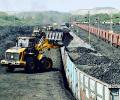
State-owned CIL on Thursday said that it has floated its maiden tender to import 2.416 million tonnes of coal to ensure adequate supply of the fuel to power plants in the country. The development assumes significance in the wake of the government making all efforts to build up stock of coal to avoid the reoccurrence of power outages which happened in April on account of shortage of the fossil fuel. "In a first ever, Coal India Limited (CIL) on Wednesday floated an international competitive bidding e-tender, seeking bids for import of 2.416 million tonnes (MTs) of coal," the company said in a statement.

The mission has proposed pilot projects for replacing fossil fuels and fossil fuel-based feedstocks with Green Hydrogen and its derivatives.

Stressing the need for coal sector reforms, the presentation said, "Independent regulation of coal sector becomes essential to ensure that e-auction remains competitive, to fix formulae for price revision for long-term fuel supply, to fix trading margins and to improve exploitation and allocation of available resources.

Government's fuel subsidy estimate was based on crude oil at $70.

Adani Total Gas Ltd, the joint venture of billionaire Gautam Adani's group and French energy giant TotalEnergies, will invest Rs 18,000 crore to Rs 20,000 crore in the next 8 to 10 years to expand infrastructure for retailing CNG to automobiles and piping gas to households and industries, its CFO said. The company retails CNG to automobiles and pipes gas to household kitchens for cooking purposes in 52 licences that cover 124 districts of the country. It has 460 CNG stations in the country and about 7 lakh consumers of its piped cooking gas.

A pregnant Sri Lankan woman, who had been in a queue for two days to obtain a passport to leave the crisis-hit country for employment overseas, went into labour while waiting for her turn on Thursday and delivered a baby girl.

Prime Minister Narendra Modi on Thursday thanked Qatari Emir Sheikh Tamim bin Hamad Al-Thani for the release of eight Indian nationals, who were sentenced to death after being arrested in Doha in August 2022.
However, some experts pointed out that it was still not clear whether the latest understanding between the two sides will free India, facing technology denial for over three decades, to shop around for civil nuclear technology and fuel.
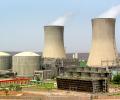
'Chinese are going bang, bang, bang building 30-35 reactors.' 'We should announce a programme of 50 new reactors and show that we mean business on the ground and not just announcements.'

Indian Oil Corporation (IOC), the nation's largest oil firm, has walked away with half of the natural gas that Reliance Industries Ltd and its partner bp of the UK offered in the latest auction of the fuel used to generate power, produce fertilizer, turned into CNG and used for cooking purposes. IOC got 2.5 million standard cubic meters per day out of the 5 mmscmd of gas auctioned last month, sources with knowledge of the matter said. The oil refining and marketing company, which was the top bidder even in the previous auction of gas from the eastern offshore KG-D6 block of Reliance-bp, bid the volumes on behalf of seven fertilizer plants.
The Indian power sector's preference for coal-based plants (more than half of India's capacity of 132,000 Mw is based on coal) may change as stricter norms for carbon emissions emerge, a report by the Tata Strategic Management Group has said.
Kakodkar took over as Chairman, AEC from Dr R Chidambaram in November 2000 and was the first chairman to get three extensions -- in 2003, 2005 and 2007 -- in the history of India's nuclear programme.
The company is currently negotiating with more buyers.
The NFUP smacks of an extremist version of masochism. It's tantamount to: You, there, c'mon clobber me, but if you leave me alive I'll disembowel you!

Shares of Mukesh Ambani-owned Reliance Industries Limited (RIL) rose nearly 1 per cent on Tuesday, hitting an intraday high of Rs 2,986.05 per share, after most brokerages reacted positively to the company's March quarter (Q4FY24) results. The bullish outlook stems from Reliance Jio's potential tariff hikes, given the competitive landscape, along with slow but steady improvement in the oil-to-chemical (O2C) vertical.
India may miss the April 1, 2005 target of conforming to Euro-III emission norms in metro cities and Euro-II norms in the rest of the country due to inability of refiners to supply the specified category of petrol and diesel.
"There are limits to which we can keep consumer prices unaffected by rising import costs. Our oil companies cannot go on incurring losses. This way they will have no money to import crude oil from abroad," the Prime Minister said in an address to the nation.
The EGoM has fixed priority for the 25 million standard cubic metes per day of gas Reliance plans to start pumping from September this year and 40 mmscmd from March 2009. It has asked the company to first supply gas from KG-D6 field, the first major field of NELP to go on production, to existing gas-based urea plants, which are now getting fuel below their full requirement.

India is unlikely to see a repeat of the 2021 energy crisis this festive season as coal-fired power stations across the country have comfortable levels of the fuel stock to meet electricity demand of the world's fastest expanding major economy.

'Our objective is to reach a localisation rate of 50% in the span of five years.'
Come December, India may have to re-evaluate purchases of Russian oil if a price cap on crude oil proposed by the US and the European Union (EU) comes into effect. That impacts nearly a quarter of India's oil purchases that come at a discount, helping limit marketing losses for India's state refiners and enabling New Delhi to manage inflation by freezing pump prices of motor fuels. In September, India imported 1 million barrels a day or 24 per cent of its overall imports from Russia, which became the biggest supplier of oil to India.
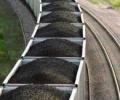
Power and Coal Minister Piyush Goyal warned that it would take years to alleviate coal supply shortages, which have reduced stocks at thermal power stations to their lowest since a huge blackout in 2012 cut off 620 million people.

Reliance Industries (RIL's) annual report released on Sunday highlighted the company's focus on new energy solutions, with chairman and managing director (MD) Mukesh Ambani stating that the age of fossil fuels will not continue much longer. RIL has sought shareholders' approval to give Ambani another five-year term as MD till 2029 at nil salary. The recently demerged Jio Financial Services, which "will leverage the prowess of digital and retail businesses", was expected to be listed soon.

The complaint was lodged by Mumbai-based Express Industry Council of India, which represented major express courier and cargo companies such as DTDC, Aramex India, Blue Dart, DHL Express, GATI and First Flight.

The two-day old strike by coal workers across India was on Wednesday called off with the government and the unions reaching an agreement after a marathon meeting.
Oil and Natural Gas Corporation will restart its flood-hit Hazira gas plant in Gujarat on August 19, two-days ahead of schedule to avert a fuel supply crisis particularly for CNG operations in New Delhi.
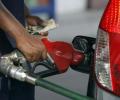
Petrol and diesel prices, which have been on a freeze for the past four months in view of assembly elections in states like Uttar Pradesh, need to be increased by over Rs 12 per litre by March 16 for fuel retailers to break even. International crude oil prices shot above $120 a barrel for the first time in nine years on Thursday before retreating a little to $111 on Friday, but the gulf between cost and retail rates has only widened. With international oil prices - on which domestic fuel retails are directly benchmarked - spiking in the last two months, state-owned fuel retailers "need a massive price hike of Rs 12.1 per litre on or before March 16, 2022, just to breakeven and a price hike of Rs 15.1 is required" after including margins for oil firms, ICICI Securities said in a report.
India and the US on Wednesday reported "good progress" on reaching a common position on the proposed bilateral nuclear agreement as they wound up first round of official-level talks in New Delhi.

Major General S C N Jatar, who passed into the ages on Monday night, thwarted anti-national forces at the peak of the Assam agitation. Colonel Anil A Athale (retd) salutes this officer and gentleman.

The Indian Space Research Organisation (ISRO) is set to welcome the new year with the launch of its first X-Ray Polarimeter Satellite that would offer insights into celestial objects like black holes, onboard a Polar Satellite Launch Vehicle rocket on Monday.

Officials from State-run refiners contend that savings from purchase of Russian oil are used to offset a part of the losses in revenues from selling transport fuels and LPG at State-set rates.

This is a good opportunity for long-term investors to pick quality small and midcap stocks at reasonable valuations.
Ratnagiri Gas and Power Pvt Ltd, the NTPC-GAIL joint venture that runs the Dabhol power plant, may have to shut down the project by end of this month due to fuel scarcity.
Tata Power, the country's largest private utility by sales, announced the acquisition of 30 per cent stake in two coal mining units and a related trading outfit of Indonesia's PT Bumi Resources for nearly Rs 4,740 crore ($1.1 billion).
India's import of discounted crude oil from the Russian Federation hit an all-time high in May, with state-run refiner IOC becoming the biggest importer of Russian oil, relegating Reliance Industries to the second place, trade and shipping data show. Indian imports of Russian oil, accounting for over 46 per cent of its total crude oil imports in May, have grown after strong backing by New Delhi, with state-run refiners powering imports of discounted crude. Discounts on Russian oil average around $10 a barrel, said an official from a state-run refiner. IOC's May purchases rose by 64 per cent on the month, and accounted for half of its total crude imports last month, ship tracking data show.

India's electric two-wheeler (E2W) sector is expected to cross the one million mark in 2024 fuelled by rising demand, increased production, and affordability, industry experts said, even as several original equipment makers are expanding their penetration to rural areas. Improved battery technology and innovative features are also likely to fuel growth, they said. "E2W sales will breach the 1-million mark in 2024 as the demand for electric two-wheelers is expected to continue growing due to factors such as environmental awareness, government incentives, and improvements in technology," Hyder Khan, chief executive officer (CEO), Godawari Electric Motors, said.
India will begin the supplies of ultra low sulphur petrol conforming to the Euro-III vehicular emission norms in 11 major cities and Euro-II grade fuel in other parts of the country from April 1 but supply of diesel of same grades may miss the deadli

The dreary, cold months from December to February may prove to be the undoing of many a nation as they grapple with sky-high fuel prices - a result of the Ukraine conflict and the pandemic. Many - Europe, South Korea, Japan, and China - will still pull through on the strength of their wealth or because of strong storage infrastructure. But India will have its back to the wall. Signs of liquefied natural gas (LNG) rates hitting new records this winter are already evident.
